
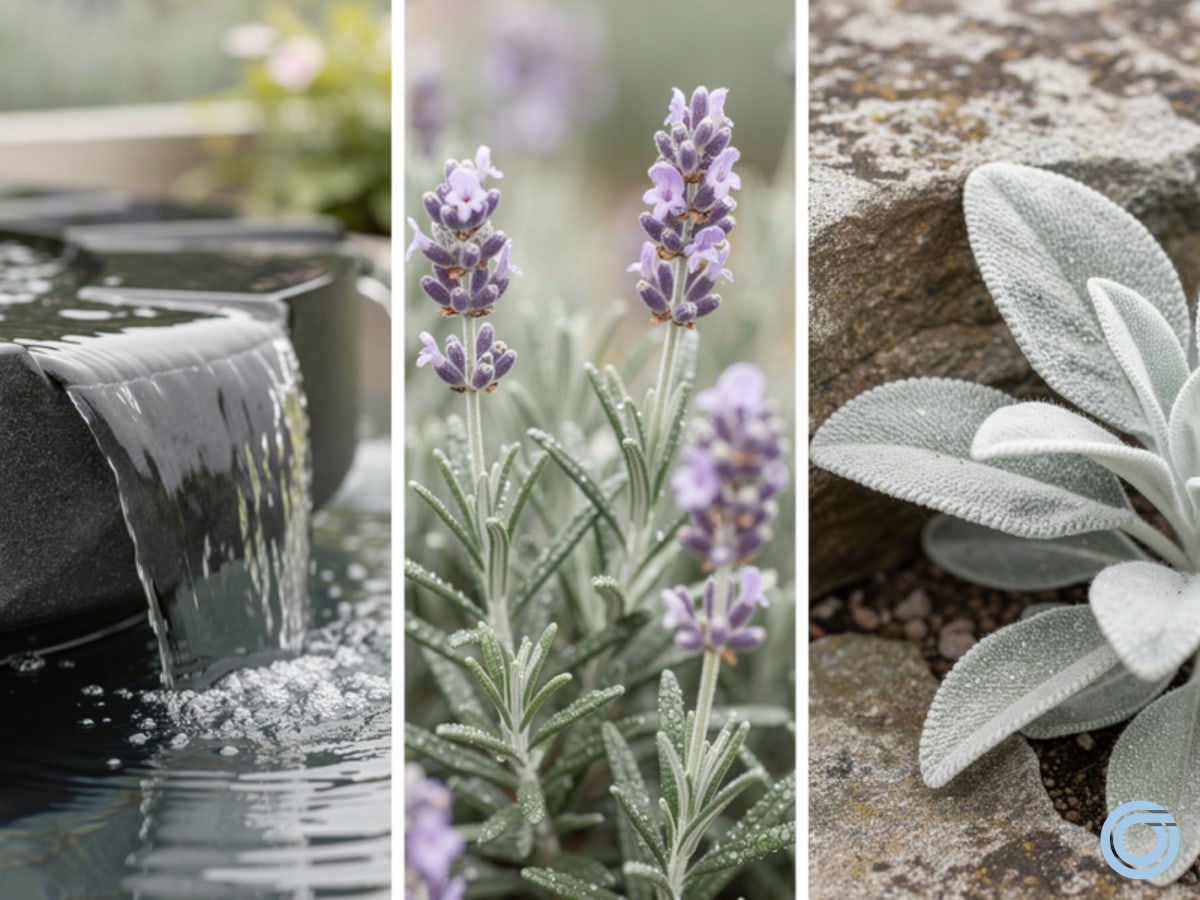
Three things that make a garden feel restorative — and none of them are visual.
Most garden design starts with how things look. But research on restorative environments suggests what you hear, smell, and touch matters just as much.
Sound:
Attention Restoration Theory identifies "soft fascination" as key to mentally restorative environments. Moving water, rustling grasses, wind through leaves, birdsong — these hold your attention gently without demanding it, allowing your directed-attention system to rest.
A simple water feature or a clump of ornamental grasses creates this effect.
Scent:
Lavender along a path you brush past daily. Rosemary by the back door. Jasmine near a seating area. Scent is processed directly by the limbic system — the brain's emotional centre — which is why it triggers memory and mood so powerfully.
Aromatic planting near paths and entrances means you experience it passively, without seeking it out.
Texture:
The feel of warm stone underfoot. Rough bark against your hand. Physical contact with natural materials connects you to the space in a way visual beauty alone doesn't achieve.
Designing for all the senses creates a garden that's genuinely restorative — not just pretty. The gardens people love most engage more than just the eyes.
📍 Surrey
#sensorygarden #gardendesign #surreygardens #landscapingsurrey #montroselandscapes

