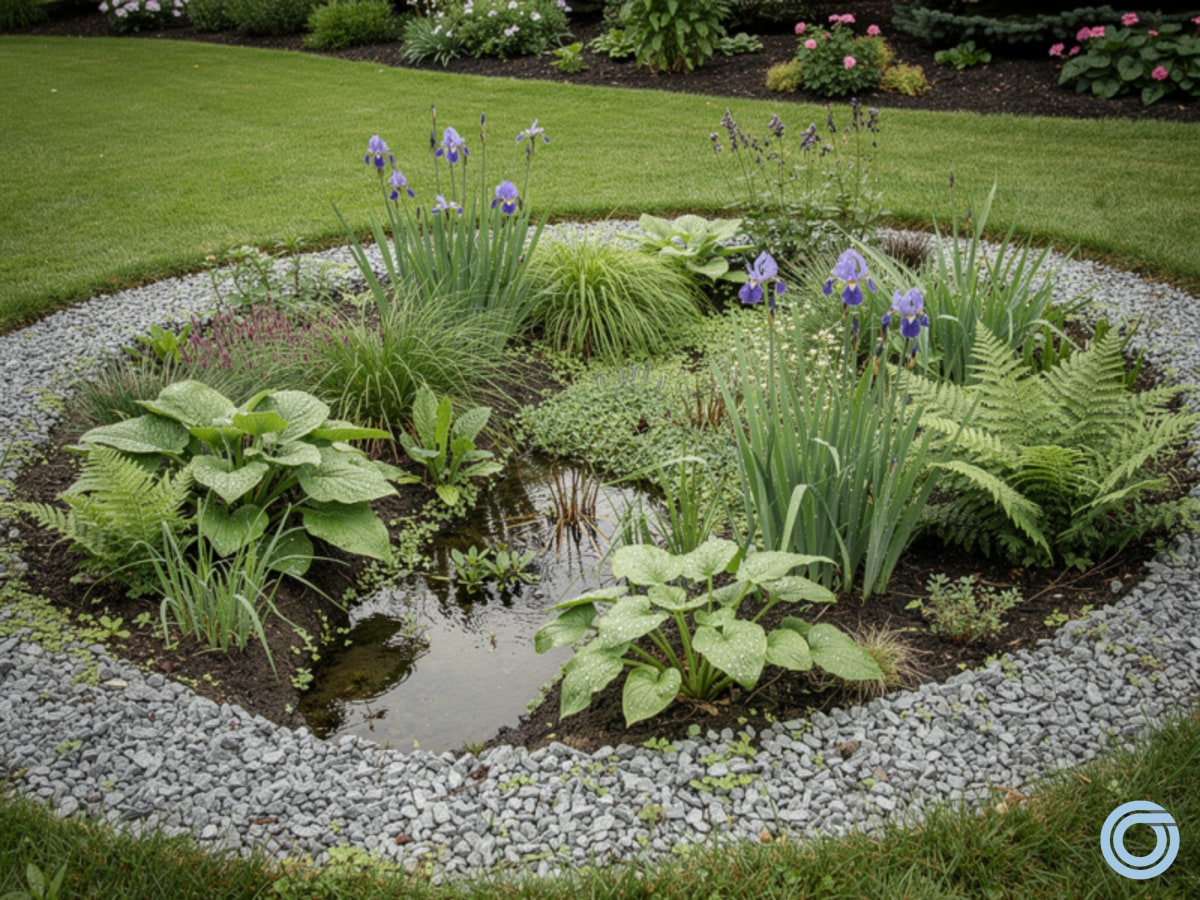
Rain gardens aren't trendy features. They're infrastructure.
With Surrey winters getting wetter — the 2023–24 winter was the wettest on record for England and Wales — managing water in your garden is becoming essential, not optional.
What a rain garden actually is: a shallow planted depression designed to capture and filter rainwater from hard surfaces. It fills during heavy rain, filters the water through soil and plant roots, and drains within 24–48 hours.
What the evidence says they do:
— Capture over 86% of stormwater runoff (Villanova University research)
— Remove roughly 80% of suspended solids
— The RHS recommends sizing them at approximately 20% of the roof area they drain
Since October 2008, planning permission has been required for laying impermeable hard surfaces over 5m² in front gardens unless permeable surfacing is used or rainwater is managed within the garden. That regulation exists because paved gardens contribute an estimated £270 million annually to flood costs.
The approach varies with your soil. On the free-draining Bagshot sands around Woking, simple soakaways work well. On London Clay — towards Byfleet or Weybridge — lined rain gardens with overflow connections are needed.
Either way, a rain garden manages drainage, cools the microclimate, supports pollinators, and looks good doing it. That's multi-functional design.
📍 Surrey
#raingarden #gardendesign #surreygardens #landscapingsurrey #montroselandscapes