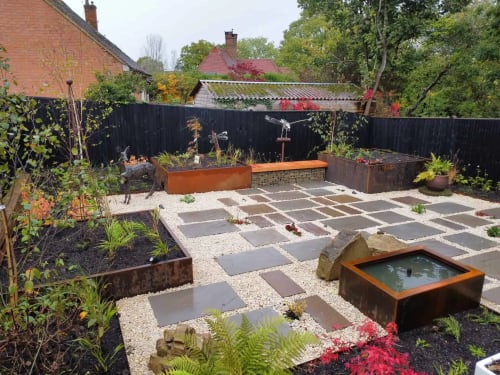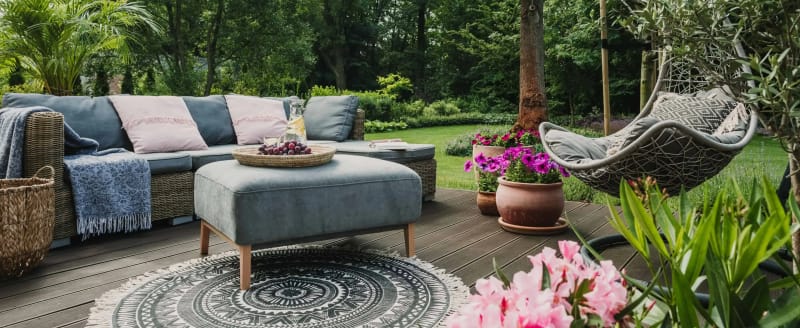
Woking is home. Our base is on Kingfield Close, GU22 9BE, and it's been the centre of our operations for over 50 years. Most of our team lives in and around the town. We know the roads, the soil, the microclimates, and the kinds of gardens that make up this part of Surrey.
That's not marketing language. It's a practical advantage. When we arrive at a Woking property, we already know whether we're likely to hit Bagshot sand or London clay. We know which local suppliers carry the right stone. We know which roads can handle material deliveries and which ones can't. We know how the drainage works in Old Woking versus Horsell versus Kingfield, because we've worked in all of them repeatedly.
Why local knowledge matters for landscaping
Garden projects are site-specific. What works brilliantly in one part of Surrey can fail completely in another, and Woking's geology is a good example of why.
Much of Woking sits on the Bagshot Formation: sandy, free-draining, slightly acidic soil. This is excellent for plants that hate wet feet (most Mediterranean herbs, lavender, rosemary, cistus) and for projects where drainage is a concern, because the ground handles water naturally. But it also means sandy soil can be nutrient-poor, dry out quickly in summer, and shift under heavy structures if the foundations aren't designed for it. Laying a patio on sand without proper compaction and a suitable sub-base is a recipe for movement within two years.
Head toward West Byfleet or the areas bordering Pyrford, and the geology shifts toward London clay. This changes everything: drainage becomes the primary concern, foundations need to account for clay's expansion and contraction with moisture, and plant selection shifts toward species that tolerate waterlogging in winter.
We don't need a soil survey to understand these patterns. We've been working them for decades. That said, we always assess each specific site because local variations within even a single street can be significant, particularly where past building work has mixed or compacted soil layers.
The gardens of Woking
Woking's housing stock creates particular garden opportunities and challenges.
The Victorian and Edwardian terraces around the town centre and Old Woking typically have long, narrow rear gardens. These reward clever design: creating zones that make a 30-metre strip feel like a sequence of rooms rather than a corridor. We've built several of these in the area, using changes in level, different surface materials, and strategic planting to create spaces that feel larger than they are.
The 1930s semi-detached houses through Horsell, Goldsworth Park, and St Johns have medium-sized gardens that are often oddly shaped (pie-slice plots from curved roads are common). These gardens have enough space for genuine landscaping projects but need efficient use of every square metre.
The larger properties around Hook Heath, Mount Hermon, and the roads toward Pyrford tend to have substantial gardens with mature trees. These projects are often about reimagining an overgrown or dated space while working around protected trees and established features that are worth keeping.
Hook Heath and Mount Hermon sit on elevated ground at the western edge of the borough, largely on Bagshot sand, with plot sizes and road widths that reflect their development as prestige residential areas through the late Victorian and Edwardian period. Gardens here often have the scale for serious long-term design work — formal structures, productive areas, significant planting schemes with room to develop over years. The sandy soil is an asset during construction: it doesn't become unworkable in wet weather the way clay does, which means build schedules are easier to hold. The trade-off is the establishment-phase attention that sandy soil demands from planting.
Pyrford sits in transitional territory — positioned between Woking's sandy central ground and the Thames Valley clay that extends toward Byfleet and Weybridge. Soil here can change between neighbouring properties depending on local topography and the history of the land. Lower-lying plots near the River Wey navigation often carry the drainage profile of clay ground; higher plots retain the sandy character of central Woking. Projects in Pyrford require the same site-by-site assessment we apply everywhere, but the range of likely conditions within a short distance is wider than in more geologically consistent parts of the borough.
What we offer in Woking
Everything we do, we do here:
Garden planning and design starts with a consultation at your property. We walk the space with you, discuss how you want to use it, and assess the practical realities. The advantage of being local is responsiveness: we're 10 minutes from most Woking addresses, which makes follow-up visits, design reviews, and quick check-ins straightforward.
Garden landscaping is the construction phase: patios, paths, walls, decking, planting, turfing, drainage, lighting, and everything that turns a plan into a finished garden. Being based locally means shorter travel times for the team, easier coordination of material deliveries, and lower logistical costs, which we pass on.
Garden aftercare and maintenance is the ongoing relationship. Lawn care, border maintenance, hedge trimming, seasonal planting, and the kind of regular attention that keeps a garden thriving. Many of our Woking maintenance clients have been with us for years. Some for decades.
Working with local conditions
Drainage is the most common issue we address in Woking gardens. Even on the sandy soils, areas with compacted subsoil (from previous building work or heavy foot traffic) can pool water. On the clay pockets toward West Byfleet, drainage is almost always part of the project. We install land drains, soakaways, and permeable paving solutions as standard where they're needed. Getting drainage right at the construction stage prevents expensive problems later.
Planting for Woking's soils rewards some thought before anything goes in the ground. On the sandy Bagshot areas, the list of plants that establish and perform reliably without supplementary irrigation extends well beyond the Mediterranean staples. Ornamental grasses — stipa, festuca, nassella — give structure and movement through autumn and winter. Salvias, alliums, verbascum, penstemon, and nepeta all handle the free-draining conditions well. What tends to struggle is anything moisture-hungry: hostas, astilbes, and many hydrangeas need either irrigation or significant soil improvement to perform on sandy ground. The nutrient-poor quality of sandy soil also means even drought-tolerant planting benefits from establishment-phase mulching and occasional organic feeding.
On the clay toward West Byfleet and Pyrford, the species that establish most reliably are those that can tolerate winter waterlogging and draw on moisture retention through the summer. Roses — often assumed to be universal — actually prefer clay to sand, establishing strongly and flowering well. Cornus, viburnum, and most native hedging species are well-matched. Daylilies and persicaria are reliable perennials for wetter ground. What clay resists is true Mediterranean planting: lavender in particular will typically fail in prolonged winter wet. Soil preparation before planting — breaking up the clay structure and incorporating organic matter — makes a real difference to establishment.
Established trees are common across Woking's older residential areas. Many are protected by Tree Preservation Orders (TPOs) or sit within conservation areas (Old Woking, parts of Horsell). We work within these constraints and, where necessary, coordinate with Woking Borough Council's tree officers. Mature trees are an asset to a garden if the design works with them rather than fighting them.
Deer are a genuine consideration in parts of Woking bordering the common and heathland. If your garden backs onto Horsell Common or the heathland toward Brookwood, deer will eat your planting. We factor this into plant selection, choosing deer-resistant species and, where necessary, specifying appropriate fencing.
When Woking gardens get built
Garden projects don't happen in a vacuum — the season affects what's practical, what's sensible, and in some cases what's necessary.
Spring and early summer are the most popular windows for landscaping starts, which means lead times extend accordingly. If you want a project ready for summer use, the design process needs to begin earlier than most people expect — ideally the preceding autumn or winter.
On Woking's sandy soils, autumn is the best planting season. The ground holds warmth into October, giving new plants time to establish root systems before winter without the stress of summer drought. Spring planting works but demands more attention to watering through the first season.
Hard landscaping — patios, walls, paths — can proceed through most of the year on sandy ground, which doesn't become unworkable in wet weather the way clay does. On the clay pockets toward West Byfleet and Pyrford, winter construction is more restricted: saturated clay is difficult to work, and excavation into wet clay compacts the surrounding ground in ways that affect drainage long after the build is finished. We schedule projects in those areas with that in mind, building in weather flexibility rather than assuming a fixed programme.
Maintenance contracts begin when the garden does. For gardens we've built, we set up aftercare to start at practical completion regardless of the season — the establishment period after a new build is when a garden most needs attention, and delaying until spring means missing the autumn and winter jobs that matter for long-term performance.
No travel overhead, no remote coordination
When you work with a landscaping company based in Woking, you get a team that's nearby throughout the project. If something comes up that needs a quick decision, we're there. If the weather changes the build schedule, we rearrange without the complexity of coordinating from the other side of the county. If you have a question six months after the project is finished, we're a local call away.
This is one of the less obvious advantages of choosing a local landscaper. The big regional companies and the sole traders who travel an hour to reach you can both do good work, but the practical convenience of having your landscaper based in the same town shouldn't be underestimated, especially for the maintenance phase when regular visits are involved.
From Woking to wider Surrey
We're based in Woking but we work across Surrey. Our regular service area includes Guildford, Weybridge, Cobham, Oxted, East Horsley, Ascot, Chobham, Cranleigh, Dorking, and everywhere in between. Woking is the centre, not the boundary.
If you're a Woking homeowner thinking about what your garden could become, we'd welcome the chance to visit, see the space, and talk through the possibilities. No obligation, no hard sell. Just a conversation with people who know your area inside out.